

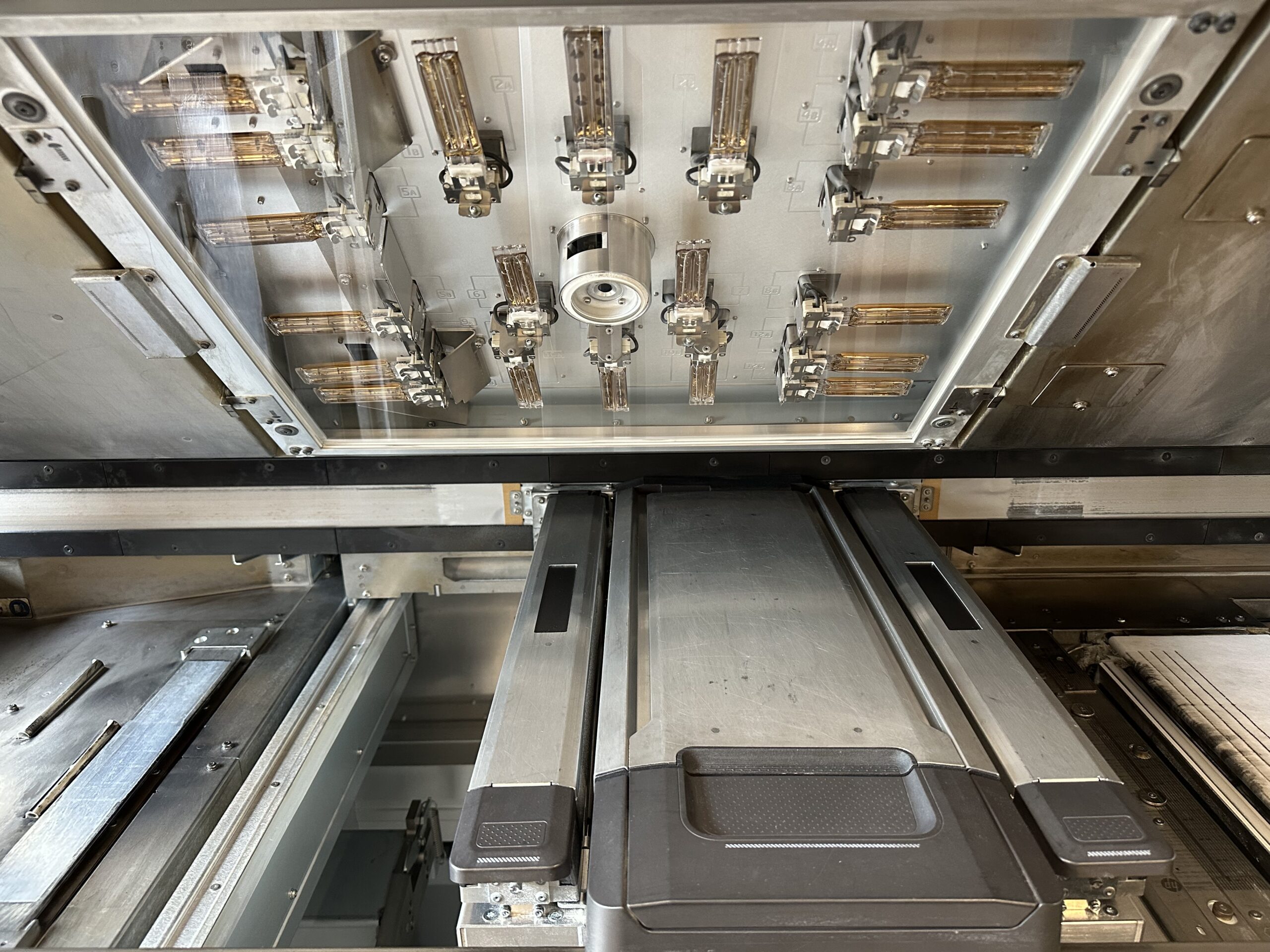
At our company, we periodically replace fusing lamps in our production 3D printers that use Multi Jet Fusion technology. These lamps are critical to achieving the correct temperature in the work chamber and to melting the PA12 (polyamide/nylon) powder, which is our primary material for 3D printing. When the powder melts, it forms durable structures that are essential to the production process.
To replace the fusing lamps, you have to disassemble the module with the lamp from the printer and then loosen the glass that protects the lamps. The glass is tightly fitted to the frame, which makes the process complicated. That is why we designed a simple tool that facilitates this task – the highlighted tool shown in the image. The tool was created in just a few minutes and printed directly in 3D. Now the whole process is faster and safer. The risk of damaging the glass or cutting yourself is eliminated. The tool has significantly improved both comfort and safety in the workplace.
Order 3D Printing – Tools, Jigs and Fixtures
HP's Multi Jet Fusion (MJF) technology combines speed with high precision. The technology is similar to other industrial technologies such as SLS (Selective Laser Sintering), SAF (Stratasys), and HSS (VoxelJet). MJF is very efficient for creating tools, jigs, and fixtures. Many industries are looking for customized solutions. That's why they are increasingly using 3D printing. MJF enables rapid production of precise parts without having to create expensive molds and dies or perform multiple steps in the production.
Companies such as Boeing, GE Aviation and Siemens have already implemented 3D printing in the production of assembly tools, precision fixtures and prototype molds. This method has not only reduced production time but also lowered costs and improved the quality of the parts produced.

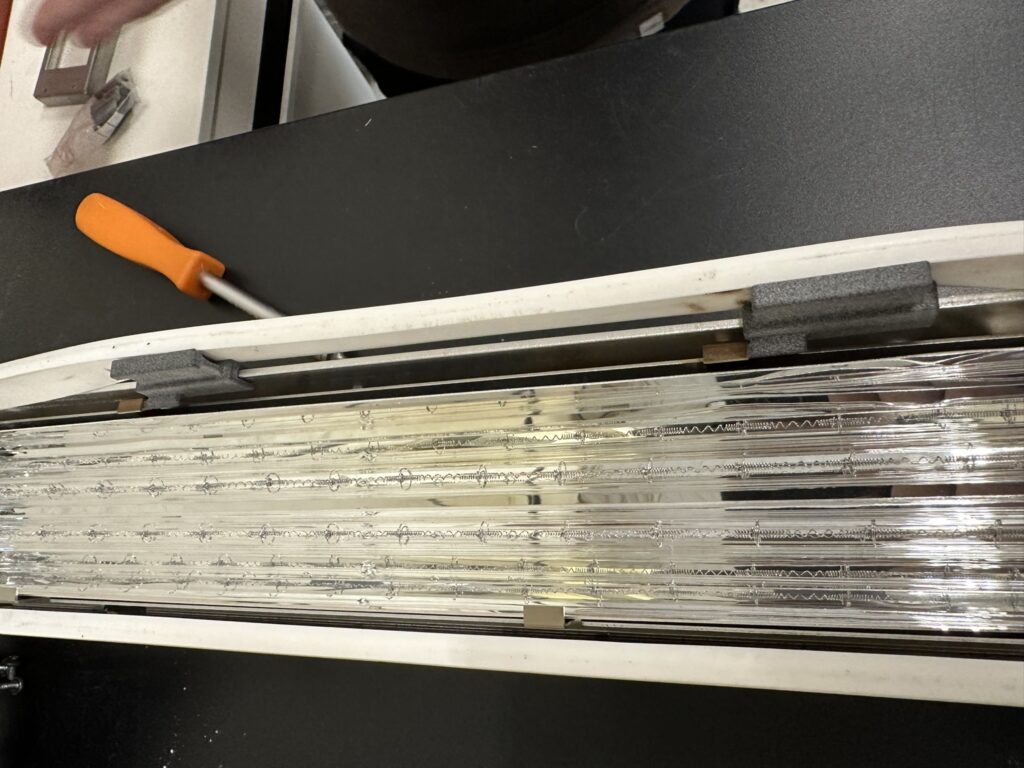

3D Printing in Production – Benefits for Industry
With MJF technology, companies can produce tools, jigs and fixtures in a highly efficient manner. Compared to traditional methods, these 3D printed parts are both lighter and stronger. In addition, they can be created with higher precision, making it possible to produce more complex shapes that are difficult or impossible to create with traditional methods. These tools can be easily customized for specific tasks or workstations.
An example of 3D printed tooling is the use of this technology by Ford to produce assembly tools and holders in its car production. By being able to quickly create and adjust these tools, Ford has been able to improve the efficiency of its production and reduce lead times.
Additive manufacturing – Safety and ergonomics at work
Workplace safety is a high priority. Tools that are 3D printed can reduce the risk of injury. They are lighter than metal tools and safer to use. Workers can customize the tools to their individual needs, making work more ergonomic. Often, the tools are designed with the health of the users in mind, resulting in less fatigue and higher accuracy.
One example of the ergonomic benefits of 3D printed tools is how Bosch uses 3D printed tools to create ergonomic workstations. This allows workers to work longer without feeling overloaded, while also increasing the precision of their work.
What advantages does 3D printing provide in the production of tools and jigs?
- Time Saving – Tools and jigs can be designed and printed in a matter of hours or days, which is much faster than traditional manufacturing methods.
- Cost reduction – 3D printing eliminates the need for expensive molds, dies, or cutting tools used in traditional production.
- Tool Customization – Tools can be customized for specific tasks or to fit a specific workflow, improving productivity.
- Higher precision – 3D printing provides more precise tools, leading to higher product quality and less risk of mistakes.
The future of 3D printing in industry
3D printing is a technology that continues to grow in popularity within industry. In the future, we will see even more companies using this technology to produce tools, jigs, and fixtures. Companies will be able to use more advanced materials, allowing them to create even stronger and more functional parts.
3D printing in industry opens up new opportunities for product customization, increased productivity, and improved workplace safety and ergonomics. Companies that invest in this technology will benefit from faster product development and improved competitiveness.
If you need help creating tools, jigs or fixtures for your production process, don't hesitate to contact us! Using 3D printing, we offer fast, cost-effective and precise solutions that can improve the quality and efficiency of your production.


