

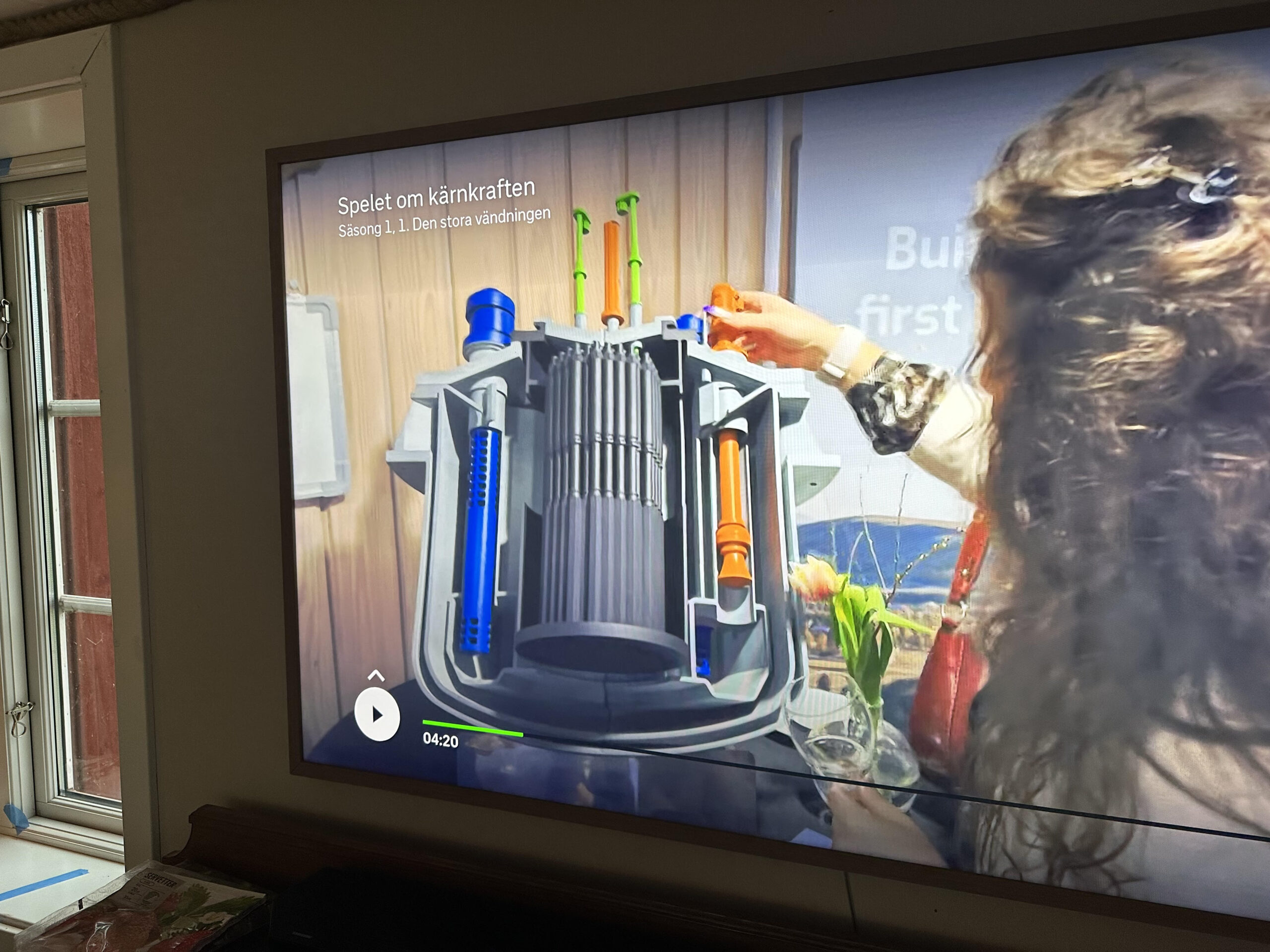
Lead cold is a Swedish company specializing in small modular reactors (SMRs). Their project SEALER-E, based on lead cooling, aims to deliver clean energy in the future. Within the framework of this collaboration, our company was responsible for printing the reactor model in Multi Jet Fusion HP technology with the material PA12 as well as for painting.
The manufacturing process
Printing the reactor model required an accurate representation of Blykallas' design. The Multi Jet Fusion HP technology enabled high quality of detail, and the PA12 material gave the model the right strength and durability. After printing, the model was painted to give it a realistic appearance that could be presented at meetings and demonstrations.


3D printing in the nuclear industry
3D printing has become an important tool for the production of components in the nuclear industry. It enables rapid prototyping, cost reduction, and the production of complex shapes that would be difficult to achieve with traditional methods.
The use of 3D printing in the nuclear industry offers many advantages. It enables faster prototype manufacturing, which speeds up research and development processes. Thanks to this, companies like Blykalla can visualize, market, test and implement new customized solutions more quickly. In addition, more and more nuclear power plants are starting to use plastic and metal spare parts manufactured using 3D printing.
The future of 3D printing in the energy sector
The future of 3D printing in the energy sector, including nuclear power, looks promising. The technology enables the production of spare parts on demand, which could revolutionize the maintenance and service of power plants. In addition, the development of 3D printing materials, such as metal alloys that can withstand high temperatures, opens up new possibilities for the production of components in the nuclear industry.
Summary
The collaboration with Blykalla on the SMR reactor model is an excellent example of how 3D printing is used in the nuclear industry. The project was complex because the base was an advanced 3D model and required printing in several parts, partial painting and assembly of the entire reactor. Blykalla presented our model in SVT's program Vetenskapens värld, which is about science, knowledge and innovation.


