

Modern conflicts create serious threats, such as unexploded ordnance (UXO) and improvised explosive devices (IED). These threats require precision tools that enable the neutralisation of charges in a safe and controlled manner.
The Rocket Wrench is a specialised mechanism aimed at disarming and rendering UXO harmless. The mechanism allows the operator to act safely and control the risk of explosion. In this way, both people and infrastructure are protected.
What is Rocket Wrench and how does it work
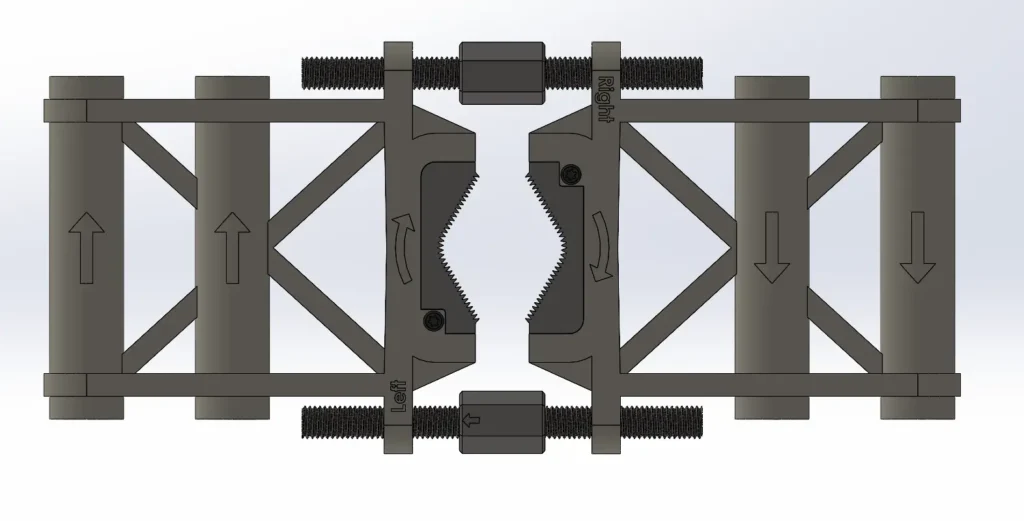
The Rocket Wrench is a complex mechanism. It allows precise manipulation of the ignition elements and safe defusing. The operator can disconnect or unscrew critical parts instead of destroying the charge by detonation.
The mechanism is designed to work reliably in difficult conditions. Each part must be checked for dimensions, geometry and mechanics.
Our Rocket Wrench project
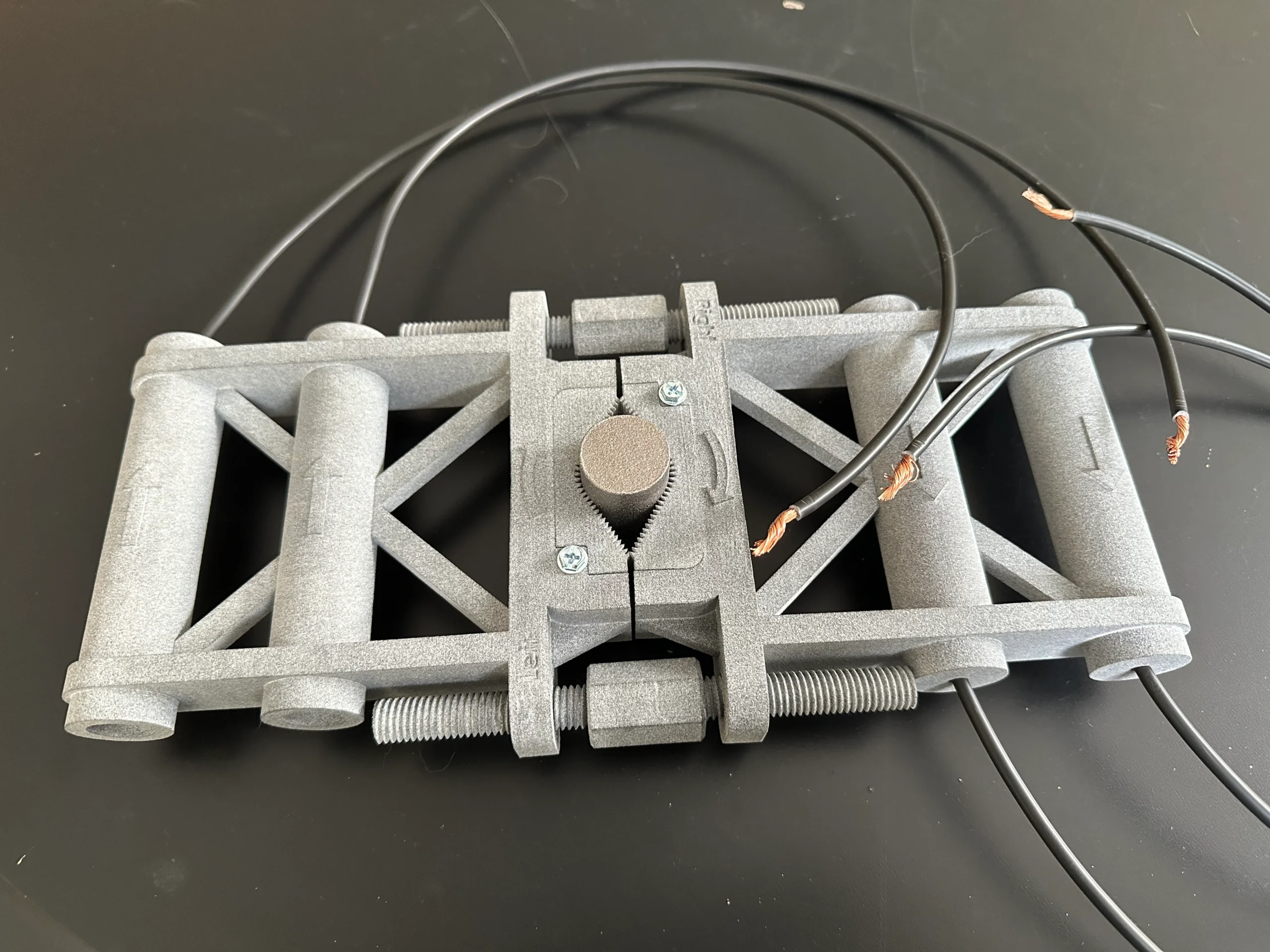
We designed our own Rocket Wrench and made a prototype in PA12 (nylon) with powder-based MJF-technology. The prototype made it possible to visually assess the design, check dimensions and test the mechanical functionality.
Genome 3D printing we were able to quickly make changes and test the functioning of the whole mechanism based on where it would be used.
Final version of the mechanism
Although the prototype was made in plastic, the final Rocket Wrench can be produced in stainless steel 316L. This material provides high durability, corrosion resistance and dimensional stability.
3D printing makes it possible to manufacture components that are fully functional directly after production. We can go from prototype to finished mechanism without expensive conventional production processes.

Why 3D printing is crucial for modern armies
3D printing is changing the way military equipment is produced. Armies can manufacture parts and entire mechanisms locally, on demand and in a very short time. This makes it possible to react quickly to changing operational needs and create multiple variants of the same object, such as drones, which can have different functions and configurations.
This flexibility allows equipment to be customised for specific missions, reducing dependence on long supply chains and increasing freedom of action. Thanks to 3D printing, components can be produced exactly when they are needed, allowing military systems to be rapidly prototyped, tested and adjusted in design.


